

Is your organization transforming fast enough?
The risk
You lead Commercial Excellence, Strategy, or Transformation at a billion-dollar business. You already know how to win.
The question isn't whether you can.
It's whether you can win fast enough.
A strategy is the gap between where you are and where you've promised to be. Your people close it — and how fast they close it is the whole game. Most programs keep them busy. Few make them faster.
The workshop lands. The pace doesn't move.
Everyone is busy. The results come late.
You win the battles. The war drags on.
Passive resistance is the tax on your pace.
It isn't failure.
It's winning too slowly.
Two years of disciplined work that pays off a year later than it could have. Real impact, left on the table.
The market won't wait for your pace. Neither will the plan.
The cost never shows on a report — it's the faster result you'll never know you missed.
The reality on the ground
You've seen the pattern. You know what it looks like.
Passive resistance
Your team nods along in the workshop. Goes back to the old way on Monday.
Lack of intrinsic motivation
Extrinsic incentives hit a ceiling. People comply without committing.
Change fatigue
Your commercial leaders have lived through three transformations in five years. They’re tired.
Cynicism from past failures
The last firm came, delivered decks, left. Nothing stuck. Your team remembers.
Behavior doesn’t shift
Training completion hits 95%. Behavior is unchanged.
Momentum stalls out
Initiatives launch hot, go quiet, become “the program nobody asks about anymore.”
Every one of these is the system doing what it was designed to do: remain stable and resist change.
Who this is for
Built for operators accountable for growth.
If you're leading Commercial Excellence, Strategy, or Transformation in a 1B+ business, you're expected to produce CFO-validated impact.
Typically, you're in one of two situations.
Situation 1 · New to the role
You've inherited a plan that looks solid on paper. You aren't convinced.
Your commercial leaders are change-fatigued. You can hear them thinking:
“Here we go again. Another one of these.”
And you are on the clock to prove this round is different.
Situation 2 · Tenured in role
You've launched initiatives. Activity is happening. Feedback is solid.
But you don't have a proof case. Nothing you can point to and say:
“Our CFO validated the impact we made.”
And you are feeling the pressure to drive visible growth.
Either way, the diagnosis is the same: you're accountable for commercial impact, but the system you inherited wasn't designed to produce it. The Operators Lab™ doesn't add another program — it replaces the ones that aren't producing results.
If that's not the situation you're in, the Operators Lab™ isn't built for you. We'd rather be clear than polite.
The missing link
Why transformations stall — and what accelerates them.
Strategy tells you where the business needs to be — if you were already there, it would not be a strategy. But closing that gap is not a planning problem. Plans, systems, and information do not produce results. People do.
Improvement is doing what you already do, better. Transformation is thousands of people fundamentally changing how they think and act. Knowing what to do is the easy part. Doing it consistently, under adversity, at scale — that is the part that breaks.
The numbers explain the feeling that things are not moving fast enough. The McKinsey Health Institute found only 23% of people rate high on both resilience and adaptability. That leaves three out of four telling you, before you start, that they are not built for change — and almost no one is building the capacity that would change it. Where it exists, innovation and engagement multiply.
That capacity has a name and a measure: adaptive capacity — Adversity Quotient (AQ®) and GRIT™, four decades of peer-reviewed science on how people interpret and respond to adversity. It is measurable, it improves with coaching, and it is the first thing the Lab measures.
of 30,000 employees rate themselves high on both resilience and adaptability. The rest are being asked to transform anyway.
higher innovation — and 6.0x higher engagement — when organizational support, psychological safety, resilience, and adaptability converge.
of employers invest in adaptability programs at all. The capacity that decides the race is the one almost nobody builds.
Source: McKinsey Health Institute survey of 30,000 employees across 30 countries; McKinsey Quarterly, December 2024.
Your transformation can only move as fast as your people adapt. That rate can be measured — and raised.
What breakthrough leaders do
The leaders who break through don't run better programs.
They build something entirely different that the CEO can't ignore.
A way of working that produces results the CFO validates, the Board backs, and the organization keeps running long-term — without external support.
The engagement
The Operators Lab™ is a free, private, 1:1 diagnostic — with the operators who've done it.
You walk out with a diagnosis of what's slowing your growth and a plan to fix it. Yours to keep — whether or not you ever hire us.
The proof case
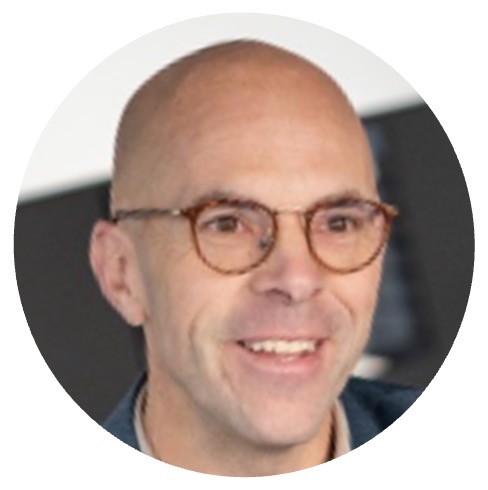
Operator-Coach-In-Residence
Roy ran the Commercial Excellence portfolio at a €7B global specialty chemicals company that produced this proof case. Promoted to Head of Business Transformation on the back of it. Today he's in the room with Operators Lab™ members — sharing the playbook directly, operator to operator, and coaching the build personally.
You don't pick up his architecture from a deck. You learn it from him.
Verify Roy on LinkedInRoy walked into a new role as Head of Commercial Excellence at a €7B specialty chemicals company that was struggling financially with very difficult market conditions.
He inherited a fully built Commercial Excellence upskilling program from a top-tier strategy consulting firm. Academically correct, logical, and beautifully designed.
He scrapped it within two months of getting hired.
Risky move, but it paid off huge.
Roy rebuilt the Commercial Excellence Academy at the center of his portfolio around three things:
- Intrinsic motivation to eliminate passive resistance
- Real commercial challenges and opportunities
- 90-day “Growth Projects” with on-the-job coaching from experienced industry veterans, not consultants.
Mid-eight-figure EBITDA impact. Validated by the CFO.
Within 18 months
He was promoted. His mandate expanded.
The figure spans his full Commercial Excellence portfolio — the Academy at the center — and became the internal standard for how change is done.
This works in highly complex, matrixed organizations where alignment is slow, politics are real, and incentives are misaligned.
The Operating System
TransformationOS™
Most programs start at the top and wonder why nothing sticks. We build from the base.
The frame
Why this isn't consulting — and how to tell.
Every buyer at a $1B+ enterprise has consultant fatigue. The firm arrives, delivers decks, runs workshops, leaves. Twelve months later, nothing has stuck. You've seen it. Your team remembers it. So when we say “we're not consultants,” the fair response is: what else are you? Here are the four structural differences that decide it.
Operators, not advisors.
The €7B proof case was run by the operator who will sit across from you — not a consultant advising from outside. Everyone you meet has either held your seat inside a billion-dollar enterprise or funded someone who has. We don't advise from frameworks — we've run the operations the frameworks are built to describe, and carried the accountability you carry now.
System installation, not deliverables.
Consultants deliver decks and leave. We install a behavioral operating system your team runs — TransformationOS™ — and coach your internal coaches so capability stays with you. There is no slide deck at the end. There is a system that keeps producing after we walk out.
You own the capability after.
The diagnosis and the plan are yours after the Lab, whether you continue or not. If you go on to build the program, the coach-the-coach model certifies your internal people and you keep the Growth Platform — 650+ frameworks. Either way, you are not back where you started. You are further ahead, with an asset you own.
We succeed when you don't need us.
Consulting economics depend on you needing the firm longer. Ours depend on you leaving with a diagnosis, a plan, and capability inside your team. Here is the unfair part: you keep all of it whether or not you hire us. No consulting engagement gives you that for free. It only works because we are confident in where it leads.
The test isn't what we call ourselves. The test is who owns the capability when the engagement ends.
How it works
Five steps, from first diagnosis to full roll-out.
The first two steps are free. From there you design, pilot, and scale the Transformation Accelerator® — at your pace, and only if you choose to.
Identify critical priorities, challenges, opportunities, obstacles, initiatives & leadership-team needs.
Learn how to accelerate transformation with scientific evidence and a proof case.
Design a solution to increase transformation velocity in your commercial organization.
Pilot the Transformation Accelerator® with an initial cohort to build evidence and prove the model works.
Global roll-out of the Transformation Accelerator® across regions and business units.
Measurement
How we measure impact — proactively.
Enterprise EBITDA is the product of thousands of variables no single program controls. Attributing a single number to a single program is a fallacy — and CFOs know it. So we track two lines of evidence a CFO can validate: the leading indicator that moves first, and the lagging indicator it produces. Both measured from day one.
Adaptive capacity — AQ® + GRIT™
Pre- and post-cohort AQ® and GRIT™ assessments show measurable movement in how people interpret and respond to adversity. It moves first — before the revenue does — and coach observations confirm the behavior change in live Growth Projects®. The earliest signal the transformation is real.
Top-line pipeline growth
New qualified pipeline where cohort participants work — net new logos won, plus cross-sell and upsell opened inside existing accounts. The lagging indicator adaptive capacity produces, tracked in the CRM systems you already run.
Yours to keep
What You Walk Away With
Every step in the journey leaves you with something real. It starts free — the early steps are yours whether or not you ever go further.
Start free, the moment you join
Before any 1:1 work begins, you get the foundation — the science, the proof, and the playbook library — yours immediately, at no cost.
- How to Succeed in Commercial Excellence Masterclass
- “How to Get Change to Actually Stick” whitepaper
- Full access to the Growth Platform
Alignment, on paper
A clear read on your priorities, challenges, and needs — confirmed with your leadership team and captured in writing.
- Commercial Transformation Needs Confirmation Deck
- A 2–3 page Diagnosis Brief, in your own words
- Reframed through the science
The science, and the proof
Your personal Adaptive Capacity profile and a live debrief with the architect of the science — plus the case that proves it works.
- Your AQ® & GRIT® profile + Dr. Paul Stoltz debrief
- His book and the explainer library
- Roy’s €7B Case Study, to study and share
Your program, designed
A Transformation Accelerator® designed around your business — tailored to you, carrying your name — plus the deck to win internal buy-in.
- Transformation Accelerator® Program Design Deck
- A board-ready Executive Alignment Deck
- A peer reference call with an executive who funded it
Proof it works
A pilot cohort that runs real cross-functional projects and produces measurable evidence — not a workshop rating.
- ~8 Growth Projects® with impact reports
- A measured +10–20% lift in adaptive capacity
- Operator-coached from start to finish
Enterprise-wide
The model rolled out across regions and business units, with the evidence to back it at the board level.
- 50+ Growth Projects® + impact reports
- An enterprise Adaptive Capacity Report
- A repeatable capability your team owns
No catch
No fee. No deadline. You keep everything.
The Lab is a mutual evaluation, so the terms are honest up front.
- No fee, and no deadline to decide. There is no clock.
- Your time is the real cost. A handful of executive hours from you, senior hours from us. We protect both and waste neither.
- You name one executive sponsor — not involved until much later, and only once you already hold a defensible plan. Your political capital stays protected.
You walk in to evaluate us as much as we are evaluating fit — and you keep everything you build, whatever you decide.
Availability
Limited Availability
We are a small team and take on very few Lab members at a time.
Each client works directly with our senior Operator-Coaches, including Roy van Griensven — our Operator-Coach-In-Residence who built the proof case at a €7B specialty chemicals company.
That means we only open seats when there's capacity to stay hands-on through your diagnosis and design.
If the current intake is full, the next start date moves out, sometimes several months.
Go deeper
Two recordings that will change how you think about transformation.
Roy van Griensven walks through exactly how he eliminated passive resistance at a €7B specialty chemicals company — and what his CFO needed to sign off on the numbers. Then an expert panel, including Dr. Paul Stoltz, creator of the AQ® measure and master coach to the US Olympic team, unpacks the behavioral science that makes it repeatable. Watch both before you apply and you'll know, with evidence, whether this fits.
Eliminating Resistance with Roy van Griensven
Roy on why top-down transformations fail, what actually works, and how servant leadership with structured autonomy produces adaptive capacity where mandates produce resistance.
Listen to the episodeLearning Science to Drive Real Growth: Mindset → Skillset → Toolset
An expert panel on why training without coaching produces negative ROI, why behavior won't change from a workshop alone, and the exact sequence that turns learning into sustained action.
Watch the recordingCommon questions
What leaders ask before they apply
What does the Operators Lab cost, and what is the catch?
+
It is free, and there is no catch. The Lab is a private, 1:1 diagnostic — five stages, on your timeline. You keep everything you build at each one: your Adaptive Capacity profile, a written diagnosis, a program design, an executive deck, and a board-ready business case — whether or not you ever hire us. Your time is the only cost: a handful of executive hours from you, senior hours from us. We can do this because we would rather build the proof case with the right few leaders than sell a program to everyone.
How is this different from what McKinsey, BCG, or Bain would deliver?
+
Three structural differences. First, the people — the €7B proof case was run by the operator who sits across from you, not an advisor, and everyone you meet has either held your seat at a billion-dollar enterprise or funded someone who has. Career consultants and junior staff stay off your work. Second, the model — MBB delivers programs, workshops, decks, and leaves. We help you design a behavioral system your own team runs, so the capability stays with you. Third, the economics — MBB transformation engagements start at seven figures and keep consultants on site for months. The Lab is free, and the program you design afterward runs at a fraction of consulting cost with your team owning the result. The transformation failure rates — McKinsey 70%, BCG 75%, Bain 88% — are not about talent; they are about a model that cannot shift behavior because the people running it seldom have to live with the results.
But isn't this consulting, even if you don't call it that?
+
Fair question. The defining test: who owns the capability after the engagement ends? In consulting, the firm owns the IP and the expertise — when they leave, your team is back where they started. In the Operators Lab™, your team owns everything. The diagnosis and the plan are yours after the Lab whether you continue or not. If you go on to build the program, the coach-the-coach model certifies your internal people to run it, and you keep the Demand Metric Growth Platform — 650+ frameworks. The business model is the inverse of consulting: we succeed when you do not need us anymore.
Is Roy van Griensven personally involved?
+
Yes. Roy is our Operator-Coach-in-Residence. He runs the Peer Operator Briefing in the Design stage — walking you through exactly what he built, operator to operator — and returns in the final stage for a direct Q&A with your executive team: the good, the bad, and the ugly of doing this over two years. Across the rest of the Lab the load is carried by our trained Operator-Coaches working under his design, and he is available to participants through our group coaching clinic.
We already have consultants on a transformation program. Is this additive or a replacement?
+
Usually a replacement for the capability building layer, but not the strategy advisory. Consultants are good at strategy, org design, and decks. They are poor at producing behavior change on the ground — their billing model depends on frameworks and workshops, not on frontline habit formation. The Operators Lab™ sits where your consulting spend has been most disappointing: the gap between the plan and what people actually do on Monday morning.
Does this work outside Europe and North America?
+
Yes. The proof case was delivered across three continents with commercial leaders coming from more than a dozen countries. The method is mindset and behavior-first, which transfers across cultures — we are not importing an "American" sales playbook, in fact our Founder is a Canadian living in Colombia. Operator-Coaches are matched to language and region where it matters. Roy leads in English, German, and Dutch and has extensive experience at senior levels in large Japanese enterprises, and working in the Americas, EMEA and APAC.
What is the minimum commitment to see a real result?
+
The Lab itself is free and runs on your timeline — a few months, or a fast track in weeks. The real commitment only comes later, if you decide to build the program you designed. In key-account B2B, where sales cycles are long, a CFO-validated proof case takes time to compound. Roy's €7B specialty chemicals company reached mid-eight-figure EBITDA impact across his full portfolio in under 18 months — the Academy was the centerpiece, not the whole story. Anyone promising that speed and those kinds of results on a multi-billion-dollar enterprise, from a single program or cause, is selling you snake oil.
How is this different from the change-management work our L&D or transformation office already does?
+
Most internal change-management or PMO functions are resourced to run programs — workshops, toolkits, communications plans. They are not resourced to coach individual operators or teams through mindset and behavior change on live commercial problems while the plane is flying. That is what the Operators Lab™ does. We work shoulder-to-shoulder with you and your commercial teams on real Growth Projects until new behaviors stick, then we leave. It is a capability injection, not a program. Additionally, our approach is based on decades of behavioral science across multiple disciplines, not a 'methodology' such as ADKAR or similar.
Still have a question we didn't answer?
Apply and we'll answer it directly in your first conversation — a candid, no-cost read with the operators who've done it.
Ready to start
A free, private read on your single biggest constraint.
Two ways in: by invitation, or apply below — we review within 48 hours. The first conversation is a candid outside read with operators who've done it. No cost, no pitch. You keep what we build, whatever you decide.
P.S. Once you apply, we'll send you the full specialty chemicals case study — the real breakdown of how the system was built and why it worked. So you can see exactly what you're about to build before you start.