
Infographic
What Is AQ®, and Why Haven’t You Heard of It?
Adversity Quotient: the resilience measure most transformation leaders have never heard of, and why it matters.
Key Insight
Here's some math that should bother every transformation leader:
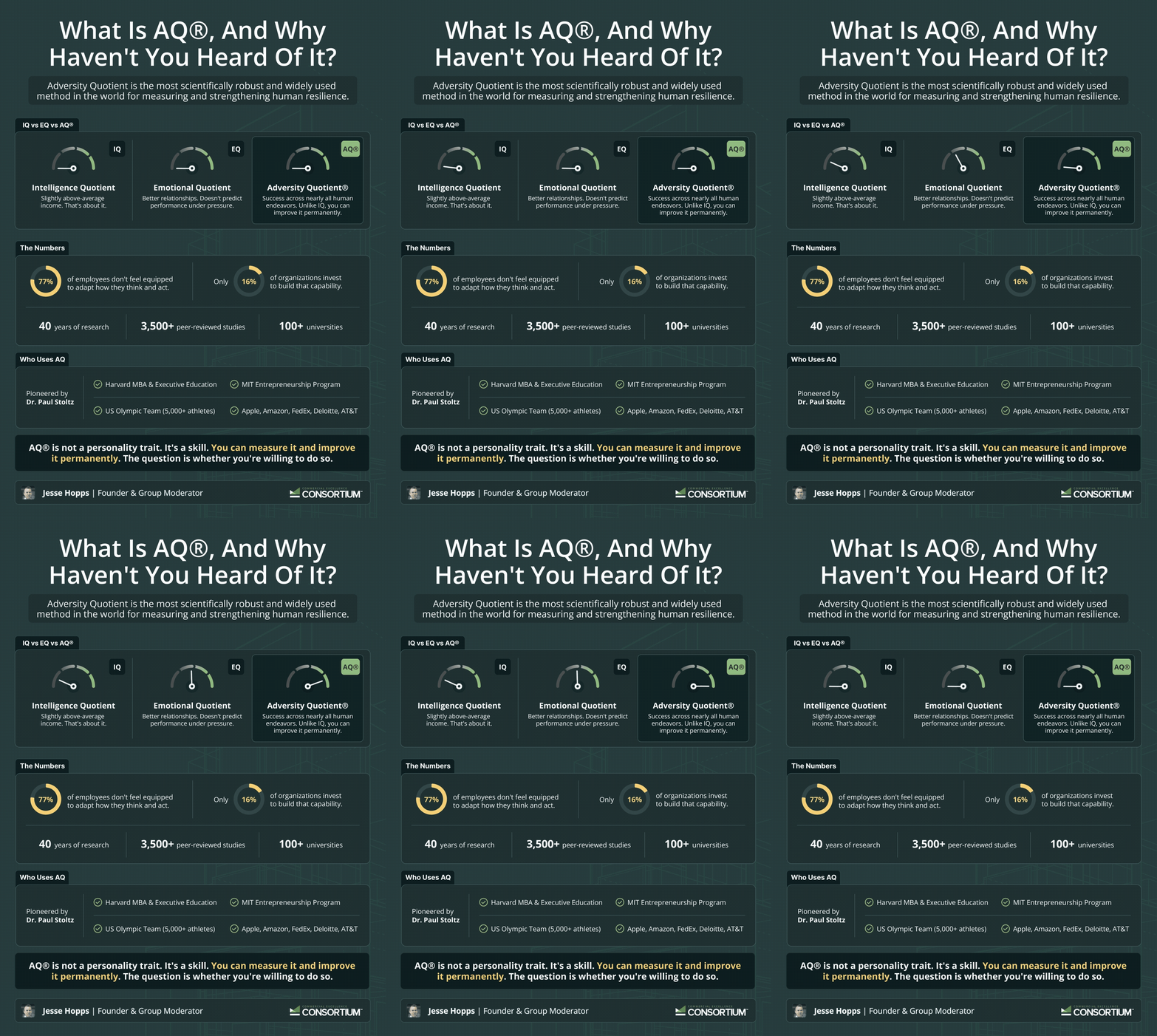
77% of employees say they don't feel equipped to adapt how they think and act, and only 16% of companies invest meaningfully in building that capability.
You're pushing full-scale transformation on this population. You can't just ignore that.
Think about what happens when the new behavior is harder than the old behavior.
When you're under stress, quota pressure, a new boss, conflicting priorities, people revert to what they know reflexively. Not because they're resistant, but because adapting under pressure is a skill, and most people have never been taught it.
There's a science for this. It's been around for 40 years, backed by 3,500+ peer-reviewed studies. Dr. Paul G. Stoltz pioneered it. Harvard teaches it. MIT uses it to screen candidates. The US Olympic team uses it to help 5,000+ athletes perform under pressure.
It's called Adversity Quotient®️(AQ).
Almost nobody in enterprise transformation has ever heard of it.
AQ measures how people interpret and respond to adversity. Higher AQ, bigger goals, more likely to achieve them. It predicts success across industries: longevity, energy, optimism, sales performance. More consistently than IQ. More practically than EQ.
Here's the part that matters for anyone trying to drive change at scale: every company has a bell curve of adaptability.
Your A players are already carrying the business. They're not the problem. The question is how you shift the curve to the right, so your C players become B players and your B players start performing like A players.
The good news is that AQ isn't a personality trait. It's a skill. You can measure it precisely and improve it permanently.
More one-look frameworks are published to the library as they're finished.
Back to all infographics