
Infographic
How Leaders Think They Grow vs. How They Actually Do
The straight line leaders think growth follows, and the winding path it actually takes.
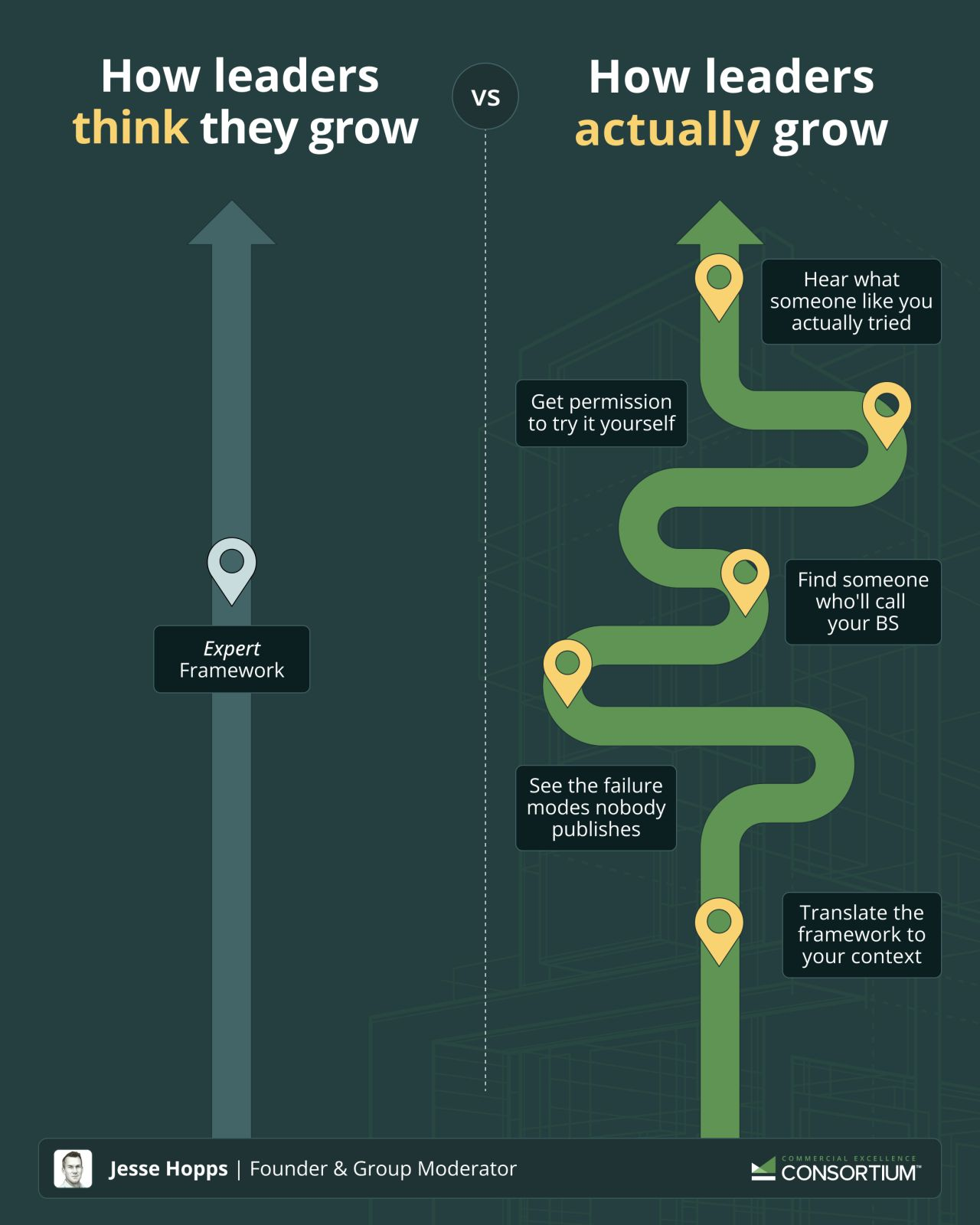
Key Insight
There's something I've been noticing in the Consortium roundtables.
I'm not gonna lie: it took me a while to recognize because it's not what I expected.
When someone shares an expert framework in the room, people listen politely. They take notes, thank the presenter, and then the energy in the room stays where it was.
When someone says "Last quarter I tried X and here's what happened in my org," the energy shifts. People lean in, ask follow-up questions, and share their own experiments. The room comes alive.
I used to think it was about the content, that people preferred concrete stories over abstract frameworks. That's part of it, but I don't think it's the main thing.
I think the main thing is permission.
When an expert presents a framework, the implicit message is "here's what should work." Which means you need to figure out if it applies to your context, whether you have the resources to do it, whether your culture will accept it.
There's a lot of work between hearing it and trying it.
When a peer shares an experiment, the implicit message is "here's what worked for someone like you." Which removes most of that translation work because if they tried it and didn't get fired, maybe you can too.
The mental gap from hearing to trying is much smaller.
That's why peer connection beats expert advice for the kind of work ComEx leaders are trying to do. It's not that experts don't have value, they do, but this type of work is blocked by missing permission, not information.
Which is something experts can't really give you, but peers can.
More one-look frameworks are published to the library as they're finished.
Back to all infographics